HVAC Duct Cleaning & Inspections In Hagerstown, MD

Is there visible mold growth in the hard surface ducts or on other components of your facilities heating and cooling system? Are the facilities ducts infested with vermin such as rodents or insects? Are the facilities ducts clogged with dust and debris or are particles actually being released into the facility from the supply registers? If any of these are true, the EPA recommends the air ducts be cleaned.
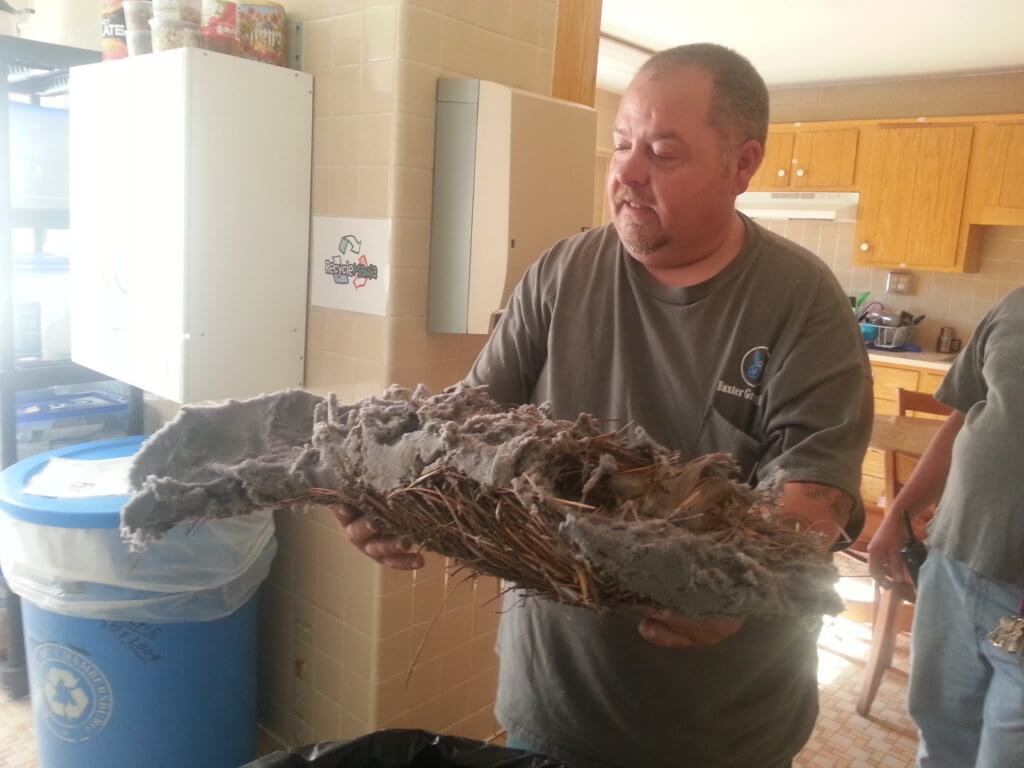
With the average person breathing 3,400 gallons of air each day it is crucial to take measures to ensure we are breathing clean air.

Inspecting HVAC air ducts should be a part of your regular preventative maintenance program, including changing filters and vacuuming registers. Air duct cleaning should be scheduled immediately when the inspection reveals any of the following:

  • Substantial visible mold growth
  • Infestation of rodents or insects
  • Excessive amounts of dust and debris
  • Particle-release from the supply registers


Baxter Environmental Group, Inc. is excited about our Breathe Healthy Initiative. Find out more about how this initiative is aimed to educate building and home owners about the role of HVAC and air duct cleaning as a way to promote indoor air quality and energy efficiency.

Frequently Asked Questions

What are some other tips for SAFE RENOVATIONS?

  • Make sure the building is structurally sound before starting the work.  If in doubt, have a structural engineer assess the building prior to commencing the work.
  • Know the building and building systems prior to starting . . . where are the gas lines, water lines, electrical lines, load-bearing walls?
  • Have the work area(s) inspected for asbestos and lead-based paint and have hazardous materials removed prior to commencing the renovation work.
  • Have a clear plan for the renovation project before commencing and be prepared to revisit and adjust the plan as needed.  Typically, when renovating older buildings, issues will arise that are best to handle during the project, not after the project.
  • Contain and separate the renovation project from the rest of the building in such a way that dust and debris stay in the renovation area only.  When renovating, the non-renovation area needs to be protected from dust, mold, and other contaminants.
  • Consult experts as needed.
  • Clean and organize the worksite daily.  This habit will keep the renovators safe and will help identify any possible problems that may arise.
  • Use personal protective equipment as needed.
  • Confirm that the carbon monoxide detectors, smoke detectors, and fire extinguishers are in good working condition.  Have a first aid kit on site.
  • Be on the lookout for mold.  Mold is one of the most vicious contaminants that seems to be hidden in buildings until renovations begin.  Address mold-contaminated environments during the project.

Pennsylvania Housing Finance Agency’s Homeowners Energy Efficiency Loan Program loans up to $10,000 for specific energy efficiency repairs for low and moderate income household.